
What Is Due Diligence When Buying a Business?
Learn what due diligence means when buying a business in Pakistan, what buyers should review and how to manage the process with confidence.

Buying an established business can offer access to customers, staff, equipment, and income. However, an attractive asking price or impressive sales figures do not tell the whole story. Before committing to a purchase, buyers need to understand what they are acquiring. For anyone considering a business in Pakistan, due diligence helps turn a promising opportunity into an informed decision.
What Does Due Diligence Mean?
Due diligence is the process of checking a business's financial, legal, operational, and commercial information before completing a purchase. It involves verifying the seller's claims, identifying potential risks, and assessing whether the business meets your expectations.
The objective is not simply to find faults. It is to understand the business clearly, confirm the basis of its value, and determine what support or investment may be needed after ownership changes.
What Should Buyers Review?
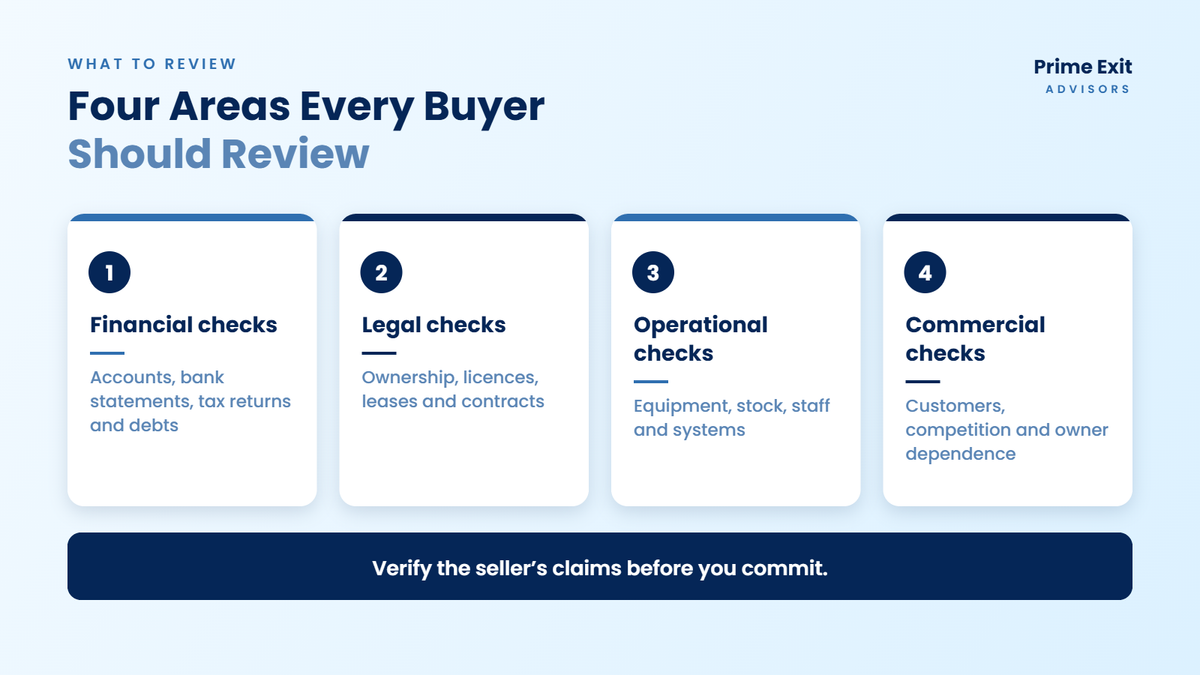
Financial checks should cover accounts, bank statements, tax returns, sales records, expenses, outstanding debts, and working capital requirements. Buyers should understand whether reported profits are sustainable and whether the owner's personal expenses or unpaid work affect the figures.
Legal checks should examine ownership, business registrations, relevant licences, lease agreements, employee obligations, contracts, and disputes. Your lawyer should establish which assets, rights, and liabilities are included in the proposed transaction.
Operational checks should assess equipment, stock, staffing, suppliers, systems, and daily procedures. Commercial checks should explore customer concentration, competition, and the business's dependence on its current owner.
Why It Matters in Pakistan
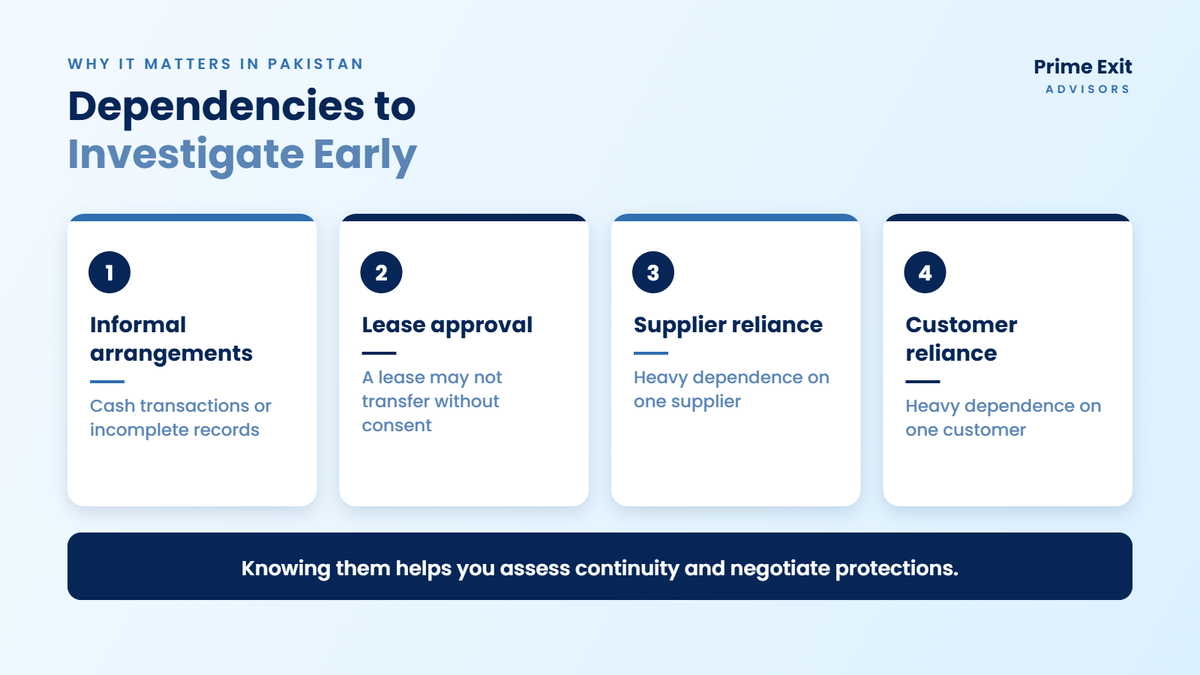
When evaluating a business in Karachi, Lahore, Islamabad, or elsewhere, buyers may encounter cash transactions, informal arrangements, or incomplete records. Where these exist, verbal assurances should be supported by available evidence and investigated.
For example, a profitable restaurant may depend on a lease that cannot be transferred without approval. A distribution business may rely heavily on one supplier or customer. Understanding these dependencies before purchase helps buyers assess continuity and negotiate appropriate protections.
How to Manage the Process
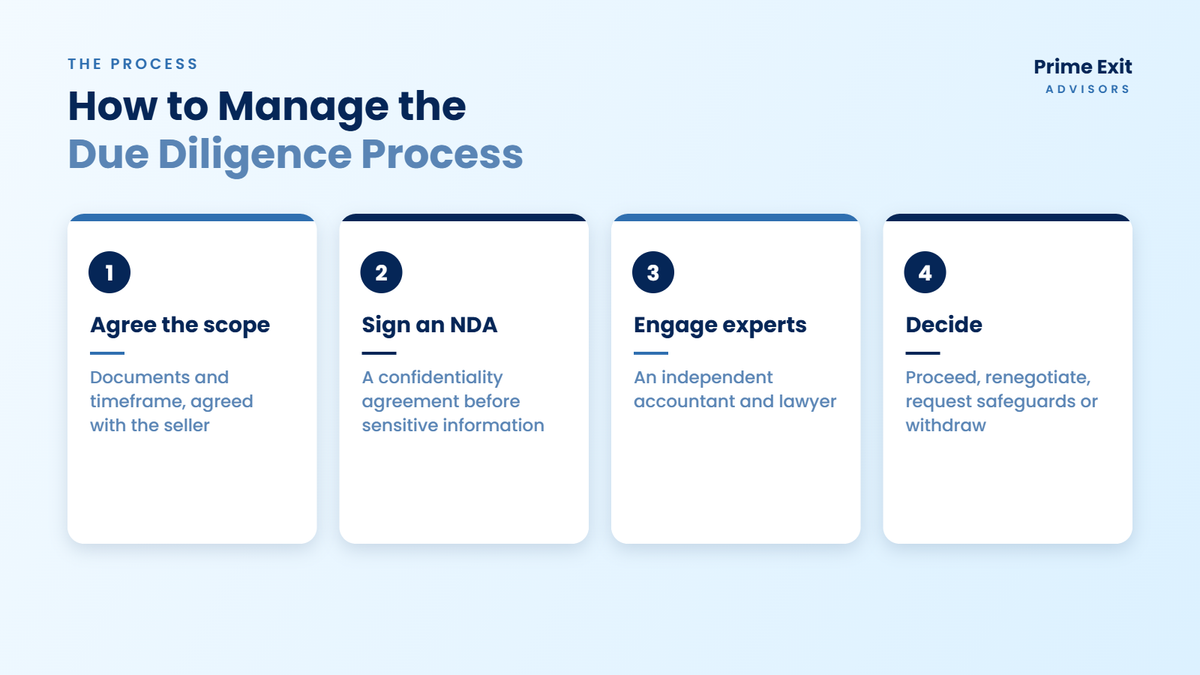
Agree on the scope, document requirements, and timeframe with the seller. Sign a confidentiality agreement before receiving sensitive information and organise questions through an agreed contact.
Engage an independent accountant and lawyer to review matters within their expertise. Record unresolved issues and address them before making an unconditional commitment. Depending on the findings and agreed terms, you may proceed, renegotiate, request safeguards, or withdraw.
Conclusion
Due diligence cannot eliminate every risk, but it helps buyers make decisions based on evidence rather than assumptions. Taking time to investigate can protect your investment and support a smoother transition.
At Prime Exit Advisors, we help buyers coordinate the transaction process and liaise with their professional advisers. Contact our team to discuss your business acquisition goals in Pakistan with confidence.

Thinking of buying a business? Talk to an advisor about your acquisition goals.
Related articles
View allThe Complete Guide to Selling a Business in Pakistan
Selling a business in Pakistan involves more than finding a buyer. Get to grips with the decisions, negotiations and details that shape a sale.

How Investors Evaluate Businesses Before Investing
Understand how investors evaluate businesses before investing, including revenue, profitability, management, market potential, risks and exit options.

Business Advisors vs Real Estate Agent vs Accountant
Should you use a business broker, an accountant or a real estate agent to sell your business? Learn the differences and why a specialist helps you achieve the best outcome in Pakistan.