
Common Business Selling Mistakes
Many business owners make avoidable mistakes that delay the sale or lower the price. Learn the most common business selling mistakes and how to avoid them.

Selling a business is a complex process that requires careful planning, preparation, and professional guidance. Unfortunately, many business owners make avoidable mistakes that delay the sale, reduce buyer interest, or result in a lower selling price. Understanding these common pitfalls can help you achieve a smoother transaction and maximize the value of your business.
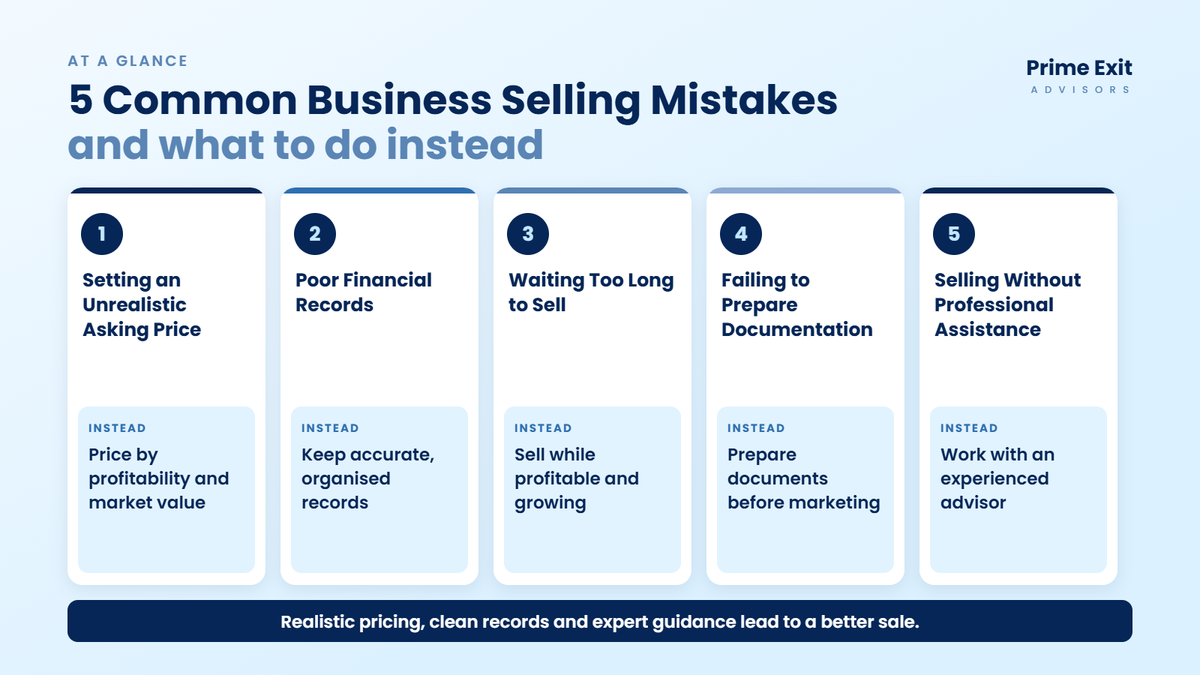
Setting an Unrealistic Asking Price
One of the biggest mistakes is overpricing the business. Many owners base the asking price on personal expectations, emotional attachment, or the amount they have invested over the years. However, buyers determine value based on profitability, market conditions, industry benchmarks, and future growth potential. An overpriced business often remains on the market longer and may eventually sell for less than its true value.
Poor Financial Records
Buyers expect accurate and transparent financial information. Incomplete bookkeeping, missing tax records, or inconsistent financial statements can reduce buyer confidence and slow the due diligence process. Well-organized financial records demonstrate that the business is professionally managed and help buyers make informed decisions.
Waiting Too Long to Sell
Many owners delay selling until revenue declines, competition increases, or personal circumstances force them to exit. Unfortunately, selling after business performance has weakened, usually results in lower offers. The best time to sell is often when the business is profitable, growing, and attractive to buyers.
Failing to Prepare Documentation
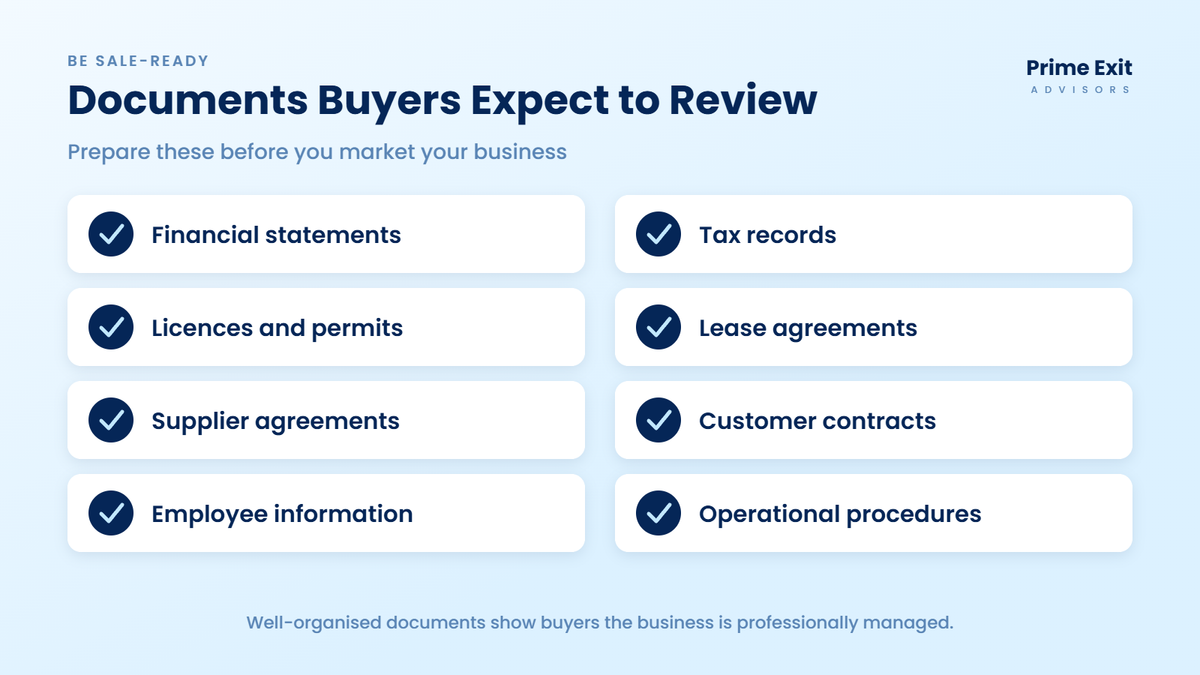
A successful business sale requires more than financial statements. Buyers also want to review licenses, leases, supplier agreements, customer contracts, employee information, and operational procedures. Missing or outdated documentation can delay negotiations and create unnecessary concerns. Preparing these documents before marketing the business saves time and demonstrates professionalism.
Trying to Sell Without Professional Assistance
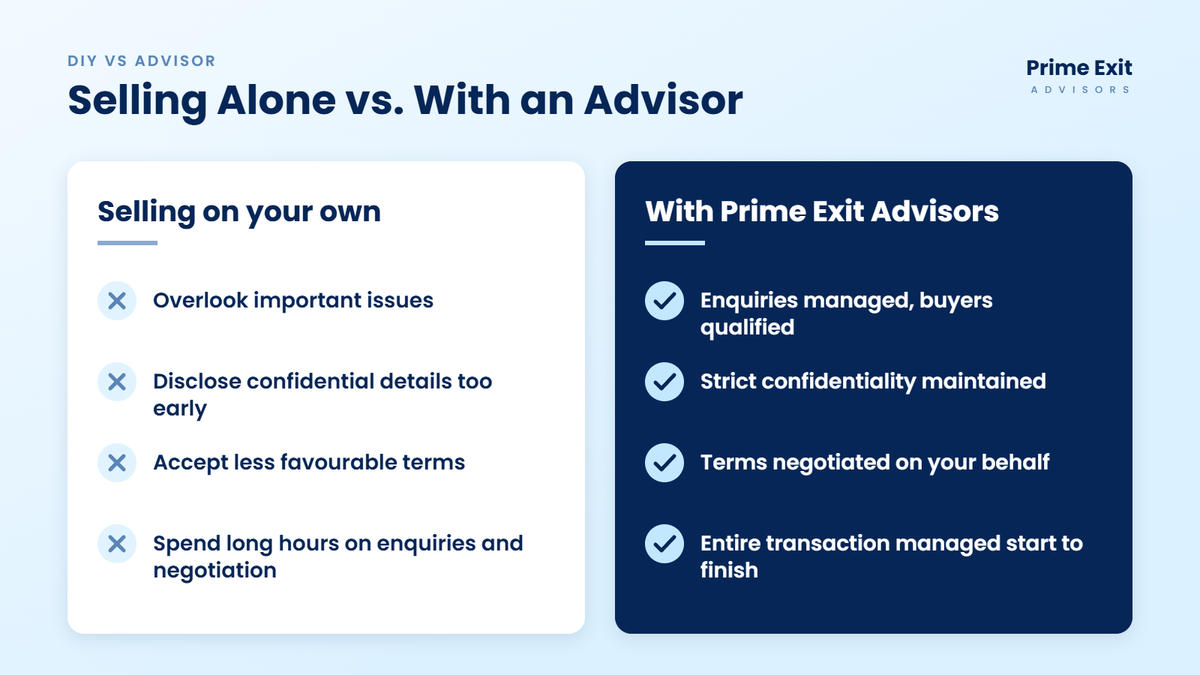
Some owners attempt to sell their business themselves to avoid paying advisory fees. However, managing enquiries, maintaining confidentiality, qualifying buyers, negotiating terms, and handling the sale process can be challenging and time-consuming. Without professional guidance, owners may overlook important issues, disclose confidential information too early, or accept less favorable terms.
Conclusion
Avoiding these common mistakes can significantly improve your chances of achieving a successful business sale. Realistic pricing, accurate financial records, proper documentation, good timing, and professional guidance all contribute to attracting qualified buyers and securing the best possible outcome.
At Prime Exit Advisors, we help business owners across Pakistan prepare their businesses for sale, determine realistic market values, maintain strict confidentiality, and manage the entire transaction from start to finish. With the right preparation and expert advice, you can sell your business with confidence and maximize the return on the years of hard work you have invested.

Want to avoid these mistakes? Talk to an advisor about a confidential sale.
Related articles
View allThe Complete Guide to Selling a Business in Pakistan
Selling a business in Pakistan involves more than finding a buyer. Get to grips with the decisions, negotiations and details that shape a sale.

How Investors Evaluate Businesses Before Investing
Understand how investors evaluate businesses before investing, including revenue, profitability, management, market potential, risks and exit options.

What Is Due Diligence When Buying a Business?
Learn what due diligence means when buying a business in Pakistan, what buyers should review and how to manage the process with confidence.