
Ensuring a Smooth Handover After Selling Your Business
A planned handover helps the buyer take control, supports employees, and protects customer relationships. Learn how to ensure a smooth handover after selling your business.

Selling your business is a major achievement, but the process does not end when the sale is completed. A planned handover helps the buyer take control, supports employees, and protects customer relationships. For businesses in Pakistan, where owners often manage important relationships personally, transferring knowledge and trust can be just as important as transferring equipment, stock, and premises.
Why a Smooth Handover Matters
A new owner needs more than the keys to the business. They need to understand how it operates, who makes decisions, and what keeps customers returning. Without preparation, even an established business can experience confusion, service delays, or disruption.
A structured transition helps maintain continuity and gives the buyer confidence. It also allows the seller to step away with clearer expectations, reducing unnecessary calls, disagreements, and requests for ongoing assistance.
Prepare Before the Sale Is Completed
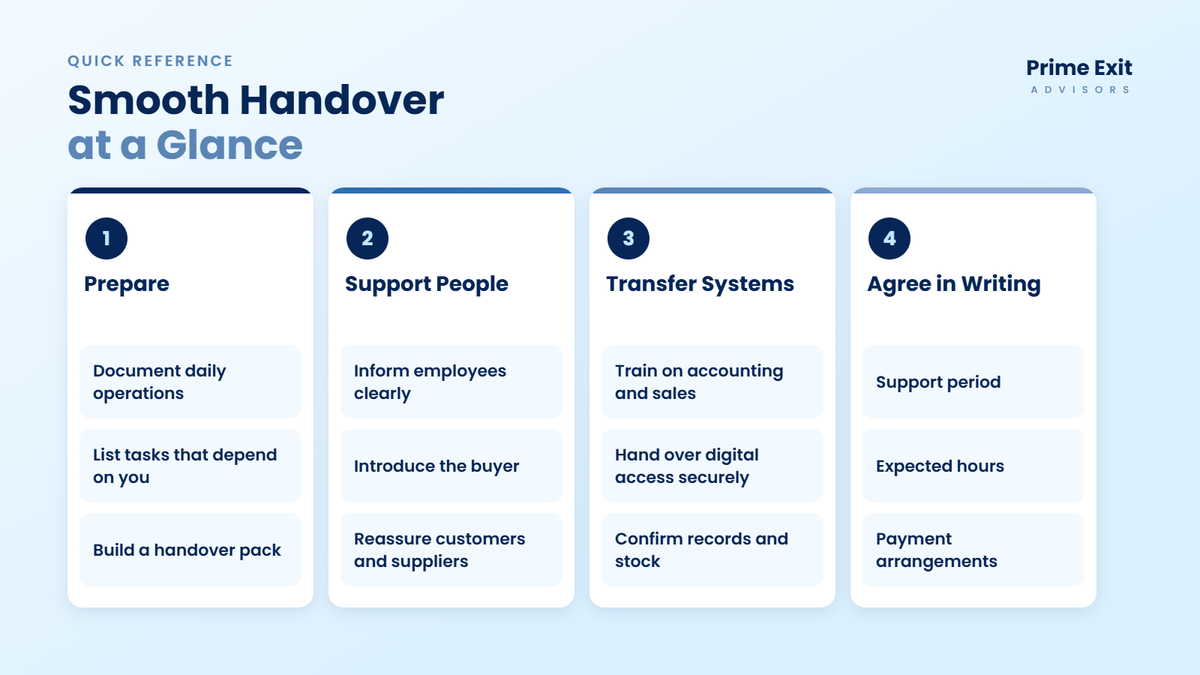
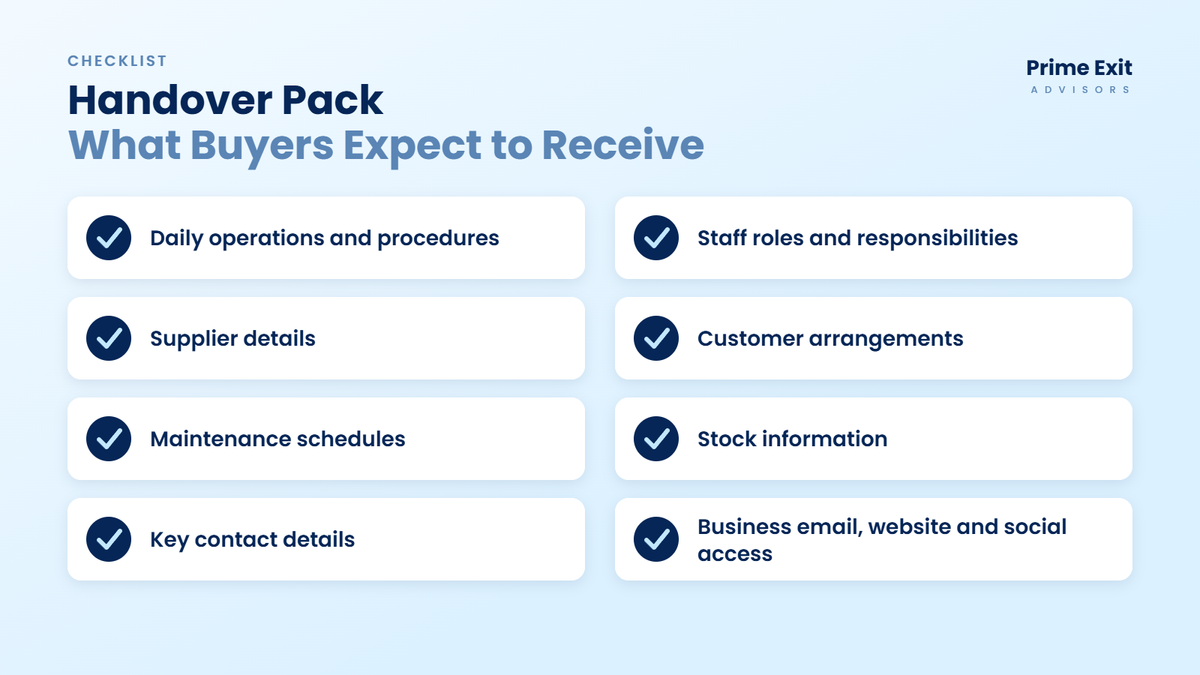
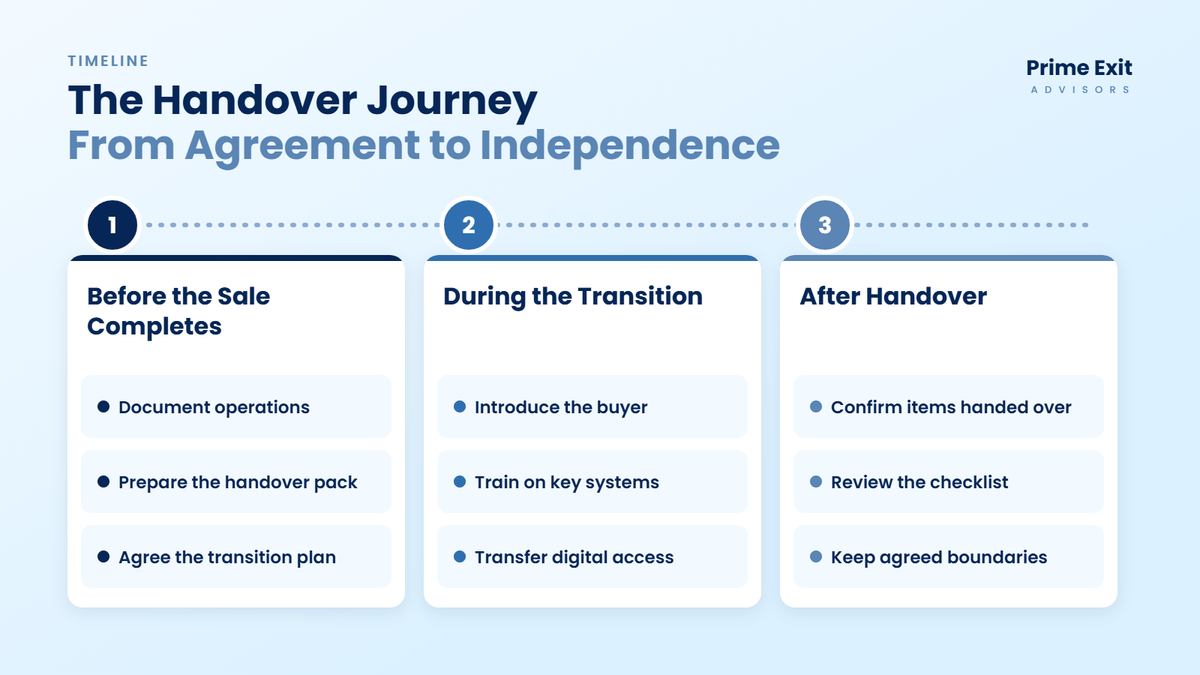
Start by documenting daily operations, staff responsibilities, supplier details, customer arrangements, and essential business procedures. Prepare an organised handover pack containing relevant records, maintenance schedules, stock information, and contact details.
Identify tasks that currently depend on you. These might include approving purchases, managing cash collections, negotiating with suppliers, or handling important customers. Explain how these responsibilities will move to the buyer or nominated employees.
Agree on a transition plan covering training, introductions, availability, and responsibilities. Specify the support period, expected hours, and any payment arrangements in writing, so both parties understand what has been agreed.
Support Employees and Business Relationships
Employees should receive clear communication at an agreed stage of the transaction. Explain the ownership change, introduce the buyer, and clarify reporting arrangements. Avoid making promises about future employment or conditions that the buyer has not confirmed.
In Pakistan, longstanding relationships with customers, distributors, and suppliers may be closely connected to the seller. Personal introductions can help establish confidence in the incoming owner. Discuss outstanding orders, agreed payment terms, and service commitments to minimise misunderstandings.
Transfer Systems and Practical Knowledge
Provide training on accounting processes, sales systems, inventory management, and routine reporting. Arrange the secure transfer of authorised access to business email, websites, social media accounts, and other digital tools.
Confirm which records, equipment, stock, and documents have been handed over. Walk through opening and closing procedures, common problems, and emergency contacts. A practical checklist helps both parties track progress and identify anything still outstanding.
Conclusion
A successful handover preserves the continuity of the business while helping the buyer become independent. Preparation, clear communication, and agreed boundaries make the transition easier for everyone involved.
At Prime Exit Advisors, we help sellers and buyers coordinate handover expectations as part of the sale process. Contact our team to discuss planning your business transition with confidence.

Planning your exit? Talk to an advisor about a confidential sale.
Related articles
View allThe Complete Guide to Selling a Business in Pakistan
Selling a business in Pakistan involves more than finding a buyer. Get to grips with the decisions, negotiations and details that shape a sale.

How Investors Evaluate Businesses Before Investing
Understand how investors evaluate businesses before investing, including revenue, profitability, management, market potential, risks and exit options.

What Is Due Diligence When Buying a Business?
Learn what due diligence means when buying a business in Pakistan, what buyers should review and how to manage the process with confidence.