
How to Determine the True Value of Your Business
Learn how business valuation works in Pakistan, from profit-based methods and industry multiples to the factors that affect the true value of your business.

One of the first questions business owners ask when considering a sale is, "How much is my business worth?" Many assume the value is based on revenue or the amount they have invested over the years. However, a business is worth what a qualified buyer is willing to pay based on its profitability, growth potential, and market demand. Understanding how business valuation works helps owners set realistic expectations and maximise the value of their business.
Business Valuation Methods
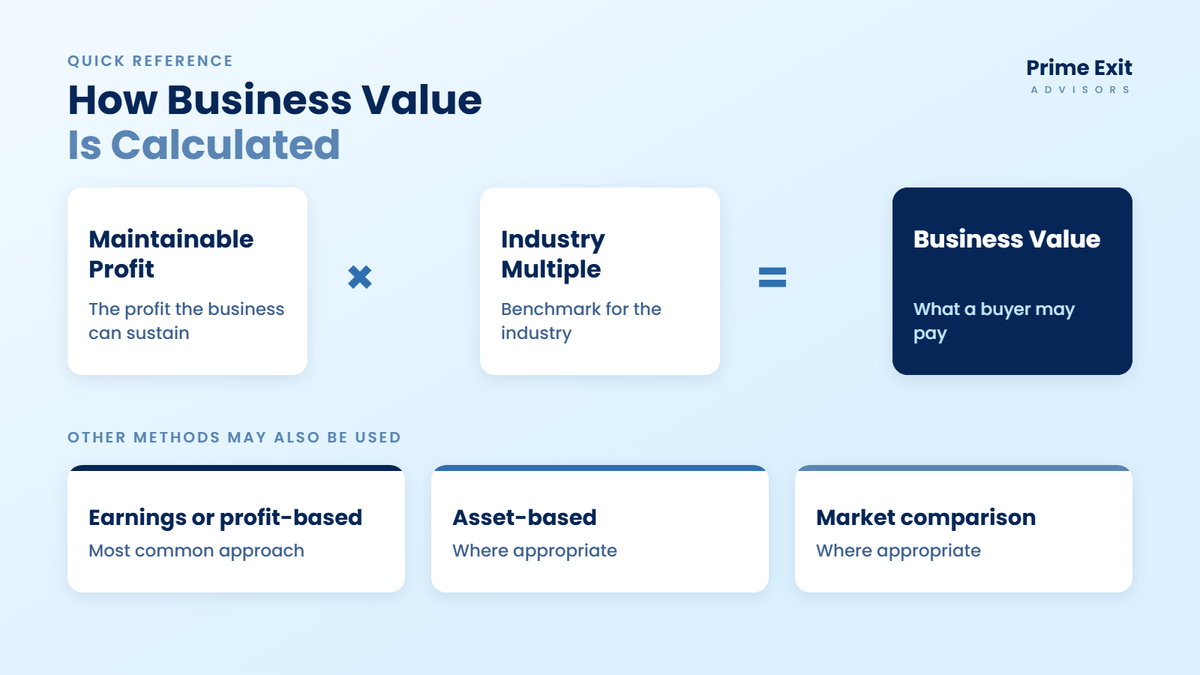
There is no single formula for valuing every business. Professional business brokers and valuers use different methods depending on the industry and business type. The most common approach is the earnings or profit-based valuation, where the business value is calculated by applying an industry multiple to the maintainable profit. Asset-based and market comparison methods may also be used where appropriate.
Profit Is More Important Than Revenue
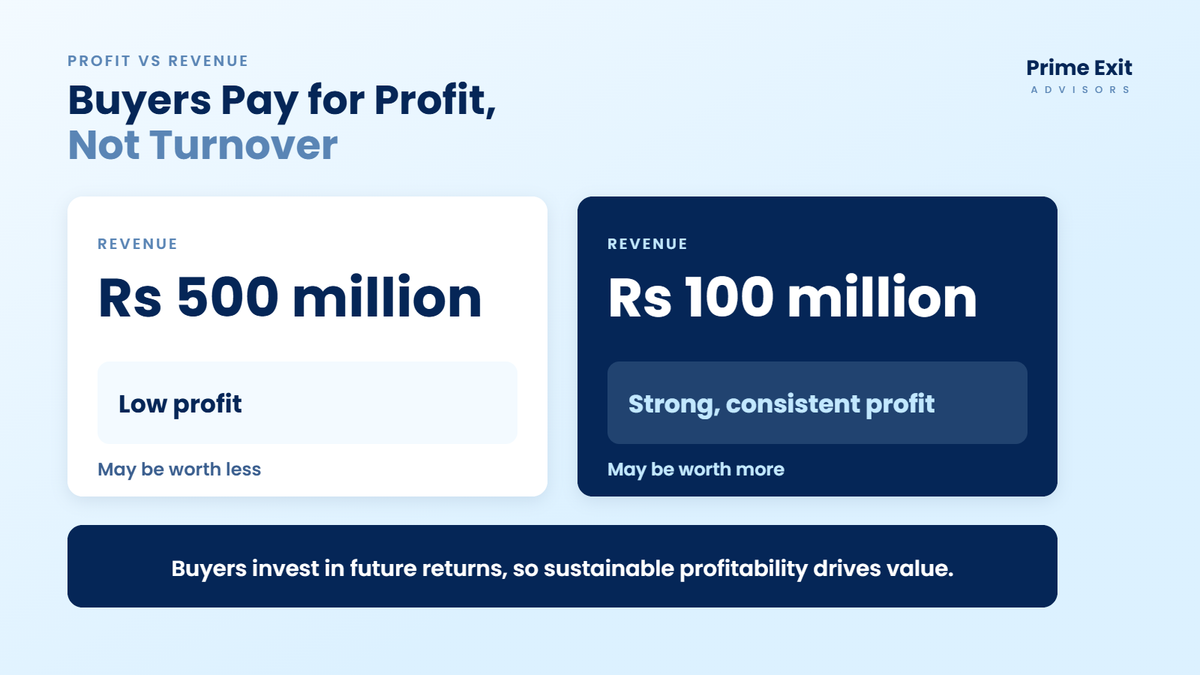
A common misconception is that businesses with high revenue are automatically worth more. In reality, buyers are primarily interested in profit, not turnover. A business generating Rs 500 million in revenue with low profits may be worth less than a business generating Rs 100 million with strong and consistent profits. Buyers invest in future returns, making sustainable profitability a key driver of value.
Understanding Industry Multiples
Different industries attract different valuation multiples. For example, manufacturing, healthcare, technology, retail, and service businesses each have their own market benchmarks. Businesses with recurring income, strong customer relationships, and proven systems generally achieve higher multiples because they present lower risk to buyers.
Factors That Affect Business Value
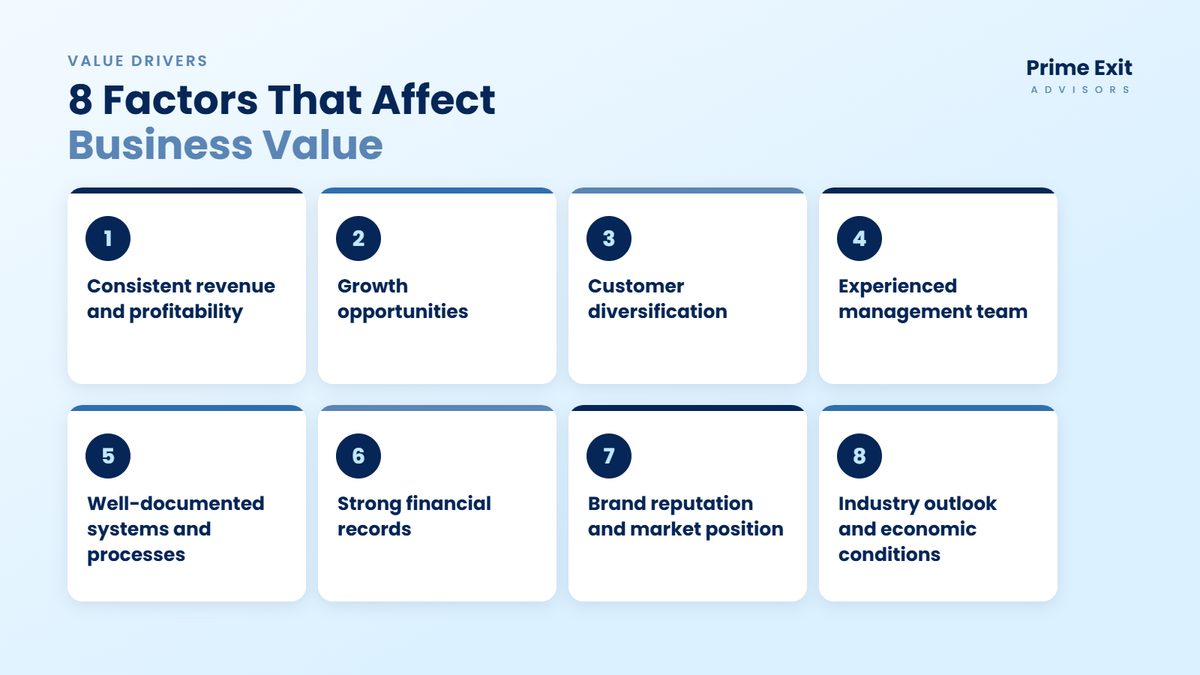
Several factors influence the final value of a business, including:
- Consistent revenue and profitability
- Growth opportunities
- Customer diversification
- Experienced management team
- Well-documented systems and processes
- Strong financial records
- Brand reputation and market position
- Industry outlook and economic conditions
Businesses that rely heavily on the owner or have poor financial records may receive lower valuations because buyers perceive greater risk.
Conclusion
Determining the true value of your business requires more than simply reviewing financial statements. A professional valuation considers profitability, market conditions, industry benchmarks, and the unique strengths of your business. Understanding its true value allows you to make informed decisions, negotiate confidently, and prepare for a successful sale.
At Prime Exit Advisors, we provide confidential business valuations for business owners across Pakistan. Our experienced advisors assess your business using recognised valuation methods and current market insights, helping you understand its true market value and prepare for a successful business sale.

Want to know what your business is worth? Talk to an advisor about a confidential valuation.
Related articles
View allThe Complete Guide to Selling a Business in Pakistan
Selling a business in Pakistan involves more than finding a buyer. Get to grips with the decisions, negotiations and details that shape a sale.

How Investors Evaluate Businesses Before Investing
Understand how investors evaluate businesses before investing, including revenue, profitability, management, market potential, risks and exit options.

What Is Due Diligence When Buying a Business?
Learn what due diligence means when buying a business in Pakistan, what buyers should review and how to manage the process with confidence.